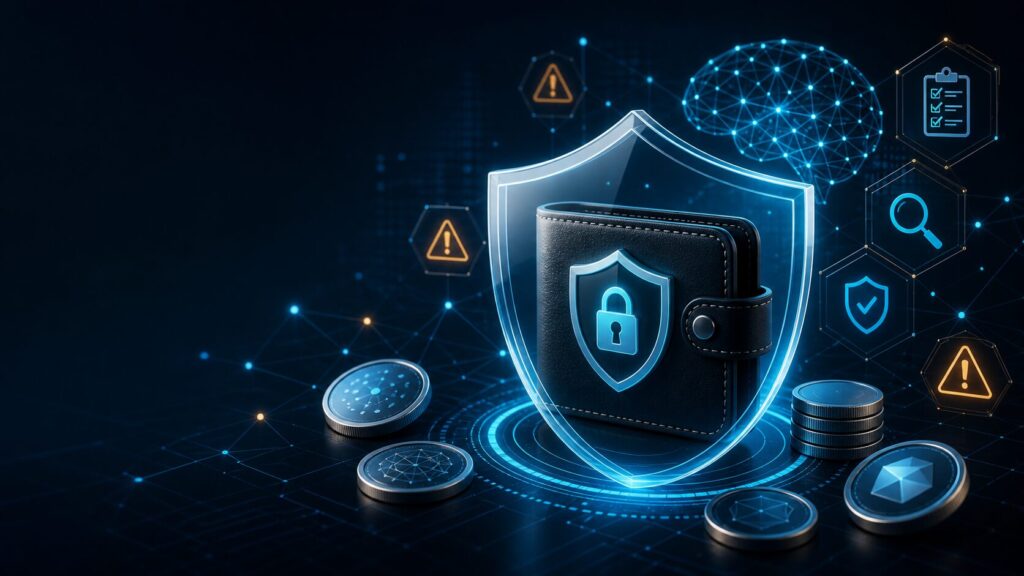
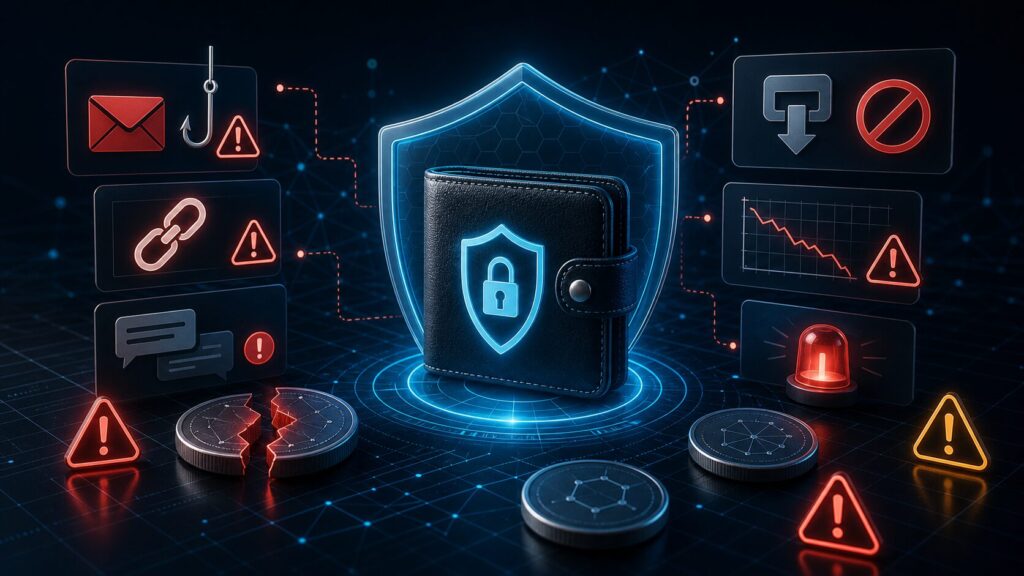
Illustration of a secure digital wallet protected from AI crypto token scams and investment fraud risks
Editor note: This guide is for education only. It is not financial advice, investment advice, or a recommendation to buy any crypto asset.
Who this guide is for: This guide is for readers who have seen an AI crypto token promoted online, are comparing a token project before investing, or want a practical checklist before connecting a wallet, joining a pre-sale, or sending money to a crypto platform.
Editorial transparency: This article was prepared by The Infosiast. Its source review is dated June 5, 2026; an October 4, 2026 editorial update consolidates the checklist, wallet-safety and scam-response sections. It summarizes official investor-safety and consumer-protection guidance from Investor.gov, the FTC, the FBI, and FINRA. We do not recommend individual tokens in this guide, and we do not accept payment to promote crypto projects here.
AI crypto tokens sit at the intersection of two powerful trends: artificial intelligence and digital assets. That combination can be exciting, but it also creates the perfect environment for hype, impersonation, fake roadmaps, pump-and-dump activity, and investment fraud. A token can use the language of AI without having meaningful technology behind it, and a project can look polished online while still being risky, unregistered, or outright fraudulent.
The smarter question is not “Which AI token will outperform Bitcoin?” The safer question is: what is this token, what problem does it solve, who controls it, what risks are hidden, and what should I verify before I put money anywhere near it?
What are AI crypto tokens?
An AI crypto token is usually a blockchain-based asset connected to an artificial-intelligence product, protocol, marketplace, or narrative. Some projects claim to power decentralized AI compute, data marketplaces, model training, AI agents, automation tools, or prediction systems. Others are simply tokens marketed around the AI trend.
That distinction matters. A serious project should be able to explain its utility in plain language: who uses the token, why the token is necessary, how the network works, how supply is managed, what rights holders have, and what risks remain. If the explanation depends mostly on buzzwords, celebrity-style promotion, anonymous screenshots, or promises of fast gains, treat it as a warning sign.
Why AI-token hype attracts scammers
Crypto already moves quickly. AI moves quickly too. When the two are combined, scammers can exploit confusion in several ways:
- Fake innovation: A project claims to use AI but provides no clear technical documentation, working product, team history, or third-party validation.
- Urgency pressure: Promoters push “early access,” “pre-sale,” or “limited allocation” language so buyers act before checking details.
- Impersonation: Scammers create fake profiles, fake support accounts, fake exchange pages, or cloned websites that look similar to legitimate brands.
- Manipulated proof: Fake dashboards can show imaginary profits, fake withdrawals, or fabricated user activity.
- Recovery scams: After a loss, another scammer claims they can recover stolen crypto for an upfront fee.
The FBI warns that cryptocurrency investment fraud often involves long-term psychological manipulation, fake platforms, fake profits, and pressure to send more money before a victim can withdraw funds. In its 2025 IC3 report, the FBI described cryptocurrency investment fraud as the highest source of financial losses reported to Americans that year.
Core risks to understand before buying
1. Extreme volatility
AI tokens can rise or fall rapidly based on market sentiment, exchange listings, social-media attention, liquidity, broader crypto cycles, and news about AI. A token that rises sharply can also collapse sharply. The FTC notes that cryptocurrency values can change quickly and significantly, and there is no guarantee that a fallen asset will recover.
2. Limited investor protections
Crypto assets are not the same as money in a bank account. The FTC explains that cryptocurrency accounts are generally not backed by a government in the way insured bank deposits are. Investor.gov also warns that many crypto asset offerings and platforms may lack protections investors expect from registered securities markets.
3. Project and custody failure
A project can fail, a token can lose liquidity, an exchange can freeze withdrawals, a wallet can be compromised, or a third-party service can disappear. FINRA warns that theft, spoofing, fake coins, pig-butchering scams, Ponzi schemes, and other fraudulent tactics continue to affect crypto users.
4. Smart-contract and wallet risk
Even when a token is not an obvious scam, smart-contract bugs, malicious approvals, phishing links, fake airdrops, and compromised browser extensions can expose a wallet. See the wallet-safety steps below before connecting to a platform or approving a transaction.
A practical AI-token verification worksheet
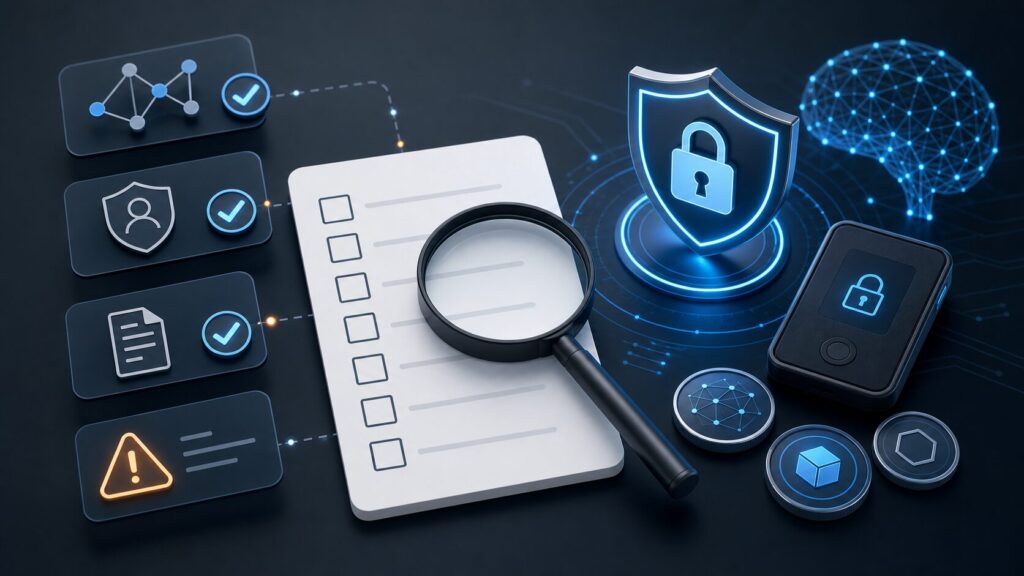
Before trusting an AI crypto token, write down answers to these questions. If you cannot find clear answers from official sources, treat that as a risk signal.
- Problem: What real problem does the project claim to solve?
- AI role: Where is artificial intelligence actually used?
- Token role: Why does the system need a token instead of ordinary software billing?
- Team: Who is accountable, and can their history be verified?
- Tokenomics: What is the supply, unlock schedule, insider allocation, and liquidity plan?
- Security: Has the smart contract been audited by a credible third party?
- Custody: Where will your tokens sit, and who controls withdrawals?
- Revenue: Is there a real business model, or only price speculation?
- Risk disclosure: Does the project clearly explain what could go wrong?
- Independent checks: Search for complaints and confirm claimed partnerships or listings directly with the named organization. A lack of complaints is not proof of safety.
- Risk limit: Could you afford a complete loss? Guaranteed returns, secret access and pressure to decide immediately are warning signs.
Find official websites independently rather than following links from unsolicited messages. Check an audit’s issuer, date and scope; an audit does not guarantee safety or cover every market, custody or fraud risk.
Red flags that an AI crypto token may be a scam
- Anonymous promoters promise unusually high returns.
- The project uses copied whitepapers, fake partnerships, or unverifiable claims.
- There is heavy pressure to buy before a deadline.
- You are asked to move conversation to Telegram, WhatsApp, or private chat before investing.
- A platform shows profits but blocks withdrawals unless you pay taxes, fees, or verification deposits.
- Support accounts ask for your seed phrase, private key, remote access, or wallet recovery details.
- Influencers promote the token without explaining compensation or risk.
If you see these signs, slow down. Scammers rely on speed and emotional pressure. A legitimate project should survive careful questioning.
How AI makes crypto scams harder to spot
Generative AI can make scams more convincing. Fake founders can appear in polished profile photos. Phishing messages can be written in natural language. Deepfake videos can imitate executives or influencers. Fake customer-support bots can respond instantly. AI-generated websites can look professional even when the underlying business is fake.
This is why verification matters more than appearance. A clean design, confident language, and active social feed are not proof of legitimacy. Look for substance: registered entities where relevant, transparent risk disclosures, verified audits, long-term public accountability, and a product that can be tested without sending money to strangers.
What to do if you suspect a crypto investment scam
If you already sent money or cryptocurrency, stop sending more. Do not pay “unlock,” “tax,” “withdrawal,” or “recovery” fees to the same group. The FBI advises victims to report cryptocurrency investment fraud at IC3.gov and to provide as much transaction detail as possible, including wallet addresses, dates, transaction hashes, and the way the scammer contacted you.
You can also report fraud to the FTC at ReportFraud.ftc.gov. Save screenshots, wallet addresses, usernames, phone numbers, emails, websites, chat logs, and transaction IDs. If an exchange or wallet provider is involved, contact its official support using an independently verified URL. Reporting may help an investigation, but it does not guarantee recovery.
How this guide was reviewed
The Infosiast reviewed this article against official consumer and investor safety guidance, removed unsupported investment claims, and added source links so readers can verify the safety advice directly. The article is intentionally written as a risk and education guide, not as a market prediction or token ranking.
AI and automated-trading claims to question
Claims such as “guaranteed AI yield,” “risk-free arbitrage” or “secret institutional algorithms” need measurable evidence. Ask what inputs and outputs the AI uses, what limitations it has, who controls funds, what fees apply and how reported performance was measured. Screenshots, anonymous testimonials and backtests do not guarantee future results.
Check that the team explains downside risk as clearly as potential benefits. A technical-sounding description is not a substitute for a working product or transparent custody arrangements.
Wallet hygiene for token research
Use a separate wallet for research and small experiments. Do not connect your main wallet to unknown sites. Review token approvals regularly. Never share a seed phrase or private key. If a website asks you to “verify” a wallet by entering recovery words, leave immediately.
A separate wallet does not make a malicious transaction safe. Check the contract address, network, requested permissions and spending limit before signing; reject any approval you cannot explain. Do not send money merely to test whether an unsolicited investment platform is genuine.
Tokenomics checks in plain English
Tokenomics describes how a token is supplied, distributed, unlocked, used, and controlled. It can reveal whether ordinary buyers are entering a fair system or simply providing exit liquidity for insiders. Read tokenomics slowly before buying anything.
- Total supply: How many tokens can exist?
- Circulating supply: How many are available now?
- Unlock schedule: When do team, investor, or treasury tokens become sellable?
- Utility: What does the token actually do inside the product?
- Governance: Who can change rules, fees, or contracts?
- Liquidity: Can buyers sell without huge price impact?
- Concentration: Do a few wallets control most of the supply?
Exchange listings and false credibility
A token being listed somewhere does not automatically mean it is safe. Some exchanges have stronger review standards than others, and decentralized exchanges may allow almost anyone to create or trade a token. Scammers may also fake listing announcements, clone exchange pages, or use confusing token names.
Always verify listings from the exchange’s official site or app. Type the URL yourself or use a trusted bookmark. Do not follow listing links from random messages, replies, or sponsored-looking posts without verification.
Community signals: useful but limited
A real community can be a positive sign, but community excitement can also be manufactured. Look beyond follower counts. Are technical questions answered clearly? Are critics banned immediately? Do moderators pressure people to buy? Are roadmap delays explained honestly? Does the team publish meaningful updates, or only price memes?
Healthy communities can discuss risk. Scam communities usually demand blind belief.
Questions to ask before joining a crypto presale
Presales can be especially risky because buyers often have less information, less liquidity, and fewer protections. Before joining any presale, ask whether the contract is verified, whether the team is identifiable, whether the token unlocks are public, whether the sale terms are clear, and whether you can afford a complete loss.
Also ask why the project needs money from the public at that stage. Some legitimate startups raise capital, but crypto presales are also a common place for hype, fake scarcity, and exit scams. If the main selling point is “get in before everyone else,” slow down.
Family and community safety
Crypto scams often reach people through friends, family, dating apps, work chats, and community groups. A scam can feel more trustworthy when it appears to come through a familiar person. If someone you know is promoting an AI token aggressively, do not attack them. Ask calm verification questions: Who controls the project? Who controls withdrawals, and what do independent reports say? Where is the audit? What official regulator or consumer warning applies?
Scammers often isolate victims by telling them that outsiders “do not understand the opportunity.” A healthy investment decision can survive outside scrutiny. A scam usually cannot.
AI crypto token FAQ
- Are all AI crypto tokens scams? No, but the category is speculative and attracts scams.
- Is a whitepaper proof? No. Whitepapers can be copied, vague, or inaccurate.
- Does an audit guarantee safety? No. Audits reduce some technical risk but do not remove market, custody, team, or fraud risk.
- Should beginners buy AI tokens? Beginners should learn wallet safety, crypto basics, and scam patterns before risking money.
What to do with your findings
Research may show enough transparent information to keep investigating, unresolved claims that make the risk too high, or an asset that does not fit your circumstances. Choosing not to proceed is a valid outcome. Attention, an exchange listing or a convincing AI story is not evidence that a token is safe.
Related guides
Sources
- Investor.gov: Exercise Caution with Crypto Asset Securities
- FTC: What To Know About Cryptocurrency and Scams
- FBI: Cryptocurrency Investment Fraud
- FBI IC3 2025 Annual Report
- FINRA: Crypto Assets – Risks