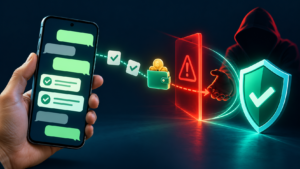

Cryptocurrency scams can involve a fake investment platform, a stolen account, or a transaction you approve without understanding its effect. The right response depends on which happened. Start by identifying the request: is someone asking you to send money, disclose a secret, install software or sign something?
This guide covers five recurring patterns. It does not rank investments or promise that any checklist makes cryptocurrency safe. Price volatility, provider failure and transaction mistakes remain risks even when no fraud is involved.
1. Fake investment platforms
An advertisement, group chat or online acquaintance directs you to a platform promising easy profits. Its dashboard shows gains, but withdrawing requires another deposit. The apparent trading activity may be fabricated.
Check the operator independently rather than relying on its own testimonials. Compare its claimed identity, website and contact details against relevant official records. A real company’s registration can be copied by an impersonator. A successful small withdrawal does not prove legitimacy: IC3 warns that it can be used to encourage larger deposits.
Stop when you are told to borrow, keep the opportunity secret, or pay a new “tax” or “unlock” charge to access your money. For the gradual relationship version, see our separate relationship investment guide.
2. Impersonation and urgent cryptocurrency payments
A caller or message claims to be your bank, an authority, an employer or a person you know. The request is urgent: move funds to protect them, pay a fine, or send cryptocurrency to solve an emergency. Caller names, logos and copied profiles are not reliable identity checks.
End the exchange and contact the claimed organisation or person using a number or account you already know. Do not use the contact details supplied in the demand. Treat secrecy and pressure as reasons to pause. The FTC warns about scammers who insist on cryptocurrency payments because those payments are difficult to reverse.
3. Wallet phishing and fake support
A copied wallet site, sponsored search result or supposed support agent asks for your recovery phrase or private key. Those secrets can give an attacker control of funds. A password reset for a website is different from restoring a self-custody wallet.
Open the wallet provider’s official help yourself. Never put a recovery phrase into a form sent by another person, share it in a chat, or let a stranger watch you enter it. Check addresses carefully and avoid support accounts that approach you after a public complaint.
If a secret has been disclosed, changing the app password does not replace the underlying wallet keys. Follow the provider’s official compromise guidance from a trusted device. Do not add funds to a compromised wallet merely because a stranger says more gas is needed to recover it.
4. Malicious token approvals and signatures
A fake reward or decentralised application asks you to connect a wallet and approve an action. Connecting an account, signing a message, granting token spending permission and sending a transaction are different operations. Some approvals or signatures can authorise asset movement.
Read the wallet’s request and stop if you cannot explain the effect. A hardware wallet protects keys but cannot make a harmful authorisation harmless. “Free” rewards can still require risky permissions.
MetaMask’s incident guidance distinguishes exposed keys from excessive permissions granted to an application. If an approval is the problem, use the wallet provider’s documented method to review and revoke it. Revoking one approval does not cure an exposed recovery phrase. Never connect to an unfamiliar “revoke” site supplied in a message.
5. Recovery and refund scams
After a loss, someone promises to trace, unlock or recover every coin for a payment. They may impersonate investigators or say a fee must be paid before recovered funds are released. A public transaction history does not give a service the power to reverse transfers.
Verify any organisation independently and reject guaranteed outcomes. Do not share secrets or pay another cryptocurrency deposit to qualify for a refund. The FTC’s recovery-scam guidance explains how a first loss can lead to a second fraud.
What to do after a suspected scam
Stop sending funds. Contact the bank, exchange or payment provider promptly through an independently opened app or official website. Ask about possible holds, investigations or reversal procedures without assuming they are available.
Save the website, messages, receipts, transaction hashes, wallet addresses, network name, dates and amounts. These help distinguish a confirmed transfer from a fake displayed balance. Keep evidence private and exclude passwords, keys and recovery phrases.
Secure affected accounts and remove suspicious sessions according to the provider’s instructions. If software or remote access was involved, use a trusted device for account recovery. Seek reputable technical assistance when the device itself may be compromised.
Report through the official police or cybercrime channels for your country. U.S. readers can report internet fraud to IC3 and consumer fraud to the FTC. Providers and investigators may be able to act, but neither a report nor a paid tracing service guarantees that funds will return.
Sources and further reading
MetaMask: Unauthorised transactions and compromise
Related guides: Relationship investment scams · Wallets, custody and cryptocurrency basics · Online safety.
Written and prepared by Kshitij Gupta.