
Editor note: This article is an educational guide, not employment, legal, or investment advice.
Who this guide is for: Students, writers, designers, developers, founders, teachers, and knowledge workers trying to understand what AI changes and what still belongs to humans.
Editorial transparency: Prepared by The Infosiast and last reviewed on June 5, 2026. This article was rewritten to replace thin opinion-style copy with a clearer, source-backed guide.
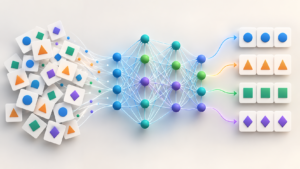
Artificial intelligence is changing creative and intellectual work, but the change is more complicated than “AI replaces people” or “AI is only a tool.” Generative AI can draft, summarize, translate, brainstorm, code, design, analyze documents, and create images. That makes some tasks faster. It also creates new risks: shallow output, hidden errors, copyright questions, biased data, job redesign, surveillance, and overdependence on systems that do not actually understand the world the way people do.
The important question is not whether AI can create something that looks impressive. It often can. The deeper question is whether people still bring judgment, taste, accountability, lived context, ethics, and purpose to the work. In most serious fields, those human parts matter more, not less.
What AI changes first
AI is strongest when a task is language-heavy, pattern-heavy, repetitive, or based on existing examples. It can turn rough notes into a draft, compare options, summarize a long report, create a first version of code, generate design directions, or help someone learn a topic faster. For many workers, the first wave of change is task-level automation rather than full job replacement.
That means job descriptions may shift. A writer may spend less time producing first drafts and more time checking facts, shaping argument, interviewing people, and editing for clarity. A developer may spend less time writing boilerplate and more time reviewing architecture, security, and product behavior. A teacher may use AI to create practice questions but still needs to understand students, motivation, and fairness.
Why human creativity still matters
Creativity is not only generating options. It is choosing what matters. It is knowing which idea fits the audience, which claim needs evidence, which visual feels honest, which joke crosses a line, which business problem is worth solving, and which draft should be thrown away. AI can produce variations, but people still define goals and standards.
Human creativity also includes experience. A doctor, journalist, artist, teacher, lawyer, researcher, or founder does not only combine words. They notice context. They understand consequences. They ask whether the answer is useful, safe, fair, and grounded in reality. AI can support that work, but it should not quietly replace responsibility.
The productivity opportunity
The strongest use cases are usually collaborative. AI can help with:
- Exploration: generating angles, questions, outlines, examples, and counterarguments.
- Compression: summarizing long documents, meetings, transcripts, or research notes.
- Translation: converting technical language into simpler explanations.
- Iteration: producing several versions so a human can compare tone, structure, and clarity.
- Assistance: helping people with disabilities, language barriers, or limited time access information more easily.
Used well, AI can reduce friction. Used carelessly, it can produce confident nonsense at high speed. The difference is review.
The risks for intellectual labor
AI changes work incentives. If companies treat it only as a cost-cutting tool, workers may face pressure to produce more with less time for care. Junior workers may lose opportunities to learn foundational skills if the early stages of work are automated away. Creative workers may see style imitation, low-quality mass output, and unclear ownership questions. Customers may receive content that looks polished but lacks depth.
There are also quality risks. AI systems can hallucinate facts, miss recent updates, reflect biases in training data, or generate content that sounds correct while being wrong. In high-stakes areas such as medicine, law, finance, safety, and education, human verification is essential.
How to use AI without losing judgment
- Start with your own intent: Define the problem before asking AI for output.
- Use AI for drafts, not final truth: Check claims against primary or reputable sources.
- Keep a human review step: Review facts, tone, bias, privacy, and audience fit.
- Protect private information: Do not paste sensitive personal, business, medical, legal, or client data into tools unless the tool and policy allow it.
- Track what changed: For professional work, keep notes on AI assistance and human edits.
- Practice the underlying skill: If AI writes your first draft, still learn how good writing, reasoning, and research work.
What workers should learn now
The safest skill is not prompt tricks. It is domain judgment. People who understand the work can use AI better because they know what to ask, what to ignore, and what to verify. Useful skills include research literacy, data awareness, editing, ethics, communication, process design, and the ability to explain why a choice was made.
Workers should also learn where AI is weak. It may struggle with new facts, local context, subtle human emotions, original reporting, complex accountability, and edge cases. A good user does not ask AI to replace judgment. A good user uses AI to widen the search space and then narrows it with expertise.
What employers should do
Organizations need clear AI policies. They should define which tools are approved, what data can be used, when disclosure is required, how outputs are reviewed, and who is accountable for mistakes. They should also invest in training instead of assuming employees will magically learn safe use.
The best organizations will not only ask, “How many workers can this replace?” They will ask, “How can this improve quality, reduce boring work, protect users, and help people do more meaningful work?” That question leads to better outcomes.
Related guides
Sources
- NIST: AI Risk Management Framework
- NIST: Generative AI Profile
- International Labour Organization: Generative AI and Jobs
- IMF: Gen-AI and the Future of Work
A practical workflow for AI-assisted creative work
A healthy AI workflow keeps the human in charge at every major decision point. Start by writing the purpose, audience, constraints, and quality standard in your own words. Then use AI to explore options, not to decide the final answer. After that, compare the output with reliable sources, your own experience, and the needs of the reader or customer.
For writing, that may mean using AI to create an outline, then doing your own research and editing. For design, it may mean using AI to explore visual directions, then choosing a direction based on brand, accessibility, and user needs. For coding, it may mean asking AI for a prototype, then reviewing security, tests, maintainability, and edge cases.
The best habit is to keep a clear separation between idea generation and approval. AI can help fill the table with possibilities. A responsible person still decides what deserves to be published, shipped, taught, or used.
Bottom line
AI can accelerate creative and intellectual work, but it does not remove the need for human judgment. The people who benefit most will be those who combine AI fluency with real expertise, ethical awareness, source checking, and a strong sense of what quality looks like.