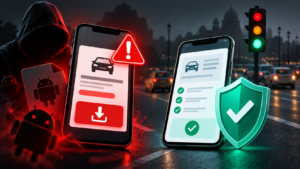
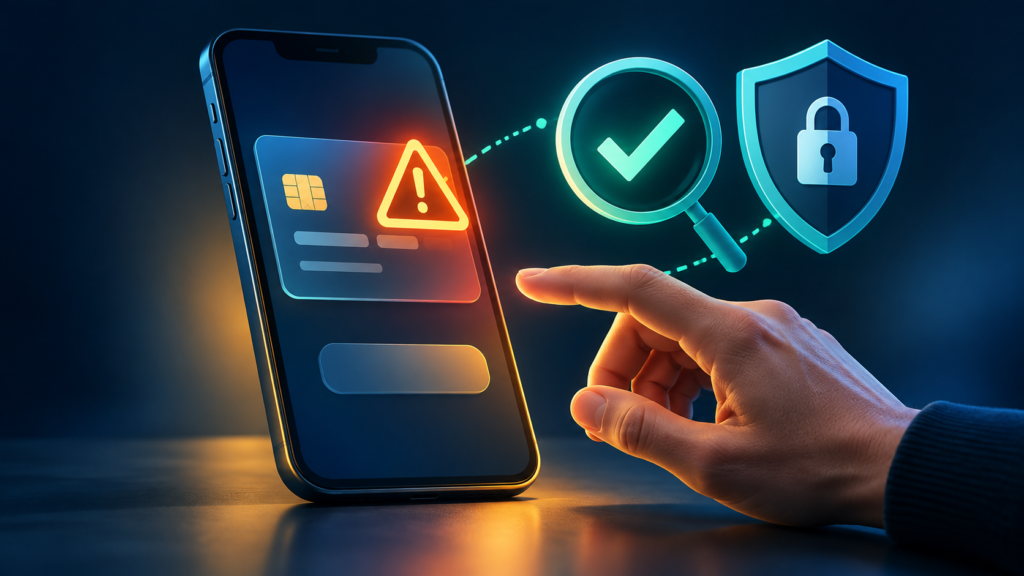
Before approving a payment request, check what action the screen will perform. A claim that you are receiving a refund, selling an item or fixing an account does not make an outgoing payment safe. This guide explains verification and response for readers using different payment services around the world.
A request is not proof that you owe money
A payment request or invoice asks you to pay. It does not independently establish a legitimate purchase, debt or sender. PayPal documents scams involving both fake emails and requests sent through its own service, including invoices for unordered goods and alarming notes with fake support numbers. PayPal’s invoice and request-scam explanation.
This distinction matters: checking that a request appears inside the genuine app can establish where it was sent, but you still need to establish why you should pay it. Likewise, a familiar contact name can belong to an account someone else controls.
Read the action, not just the story
Before authorizing anything, identify the recipient, amount, currency, funding source and any recurring-payment permission. Different services use different confirmation screens. Do not assume a rule about one payment network’s PIN or collection feature applies to every app.
| Claim | Question to resolve | Practical response |
|---|---|---|
| You must approve a request to receive a refund | Does the screen send money or grant a payment permission? | Stop and verify through the provider’s genuine support. |
| A buyer sent a payment screenshot | Does your own account show the transaction and its actual status? | Check your account independently; do not rely on the image. |
| An invoice says your account is in danger | Did you order the item, and is the support contact genuine? | Open the provider independently. |
| A known person urgently needs money | Can you verify the request using an established contact method? | Speak to them before paying. |
These are illustrative verification questions, not a claim that every unexpected request is fraudulent. Real invoices and refunds exist; the goal is to establish the transaction through trustworthy evidence.
Verify an unexpected request in five steps
- Pause the conversation. Do not authorize a payment while someone talks you through unfamiliar screens.
- Open the genuine app or a previously verified website independently.
- Review the request and your transaction history. Compare it with an order, agreement or expected payment you recognize.
- Verify the person or business through a separate trusted channel. Avoid numbers included in a suspicious invoice note.
- If the purpose remains unexplained, decline or report the request using the provider’s own controls.
The FTC advises checking recipient information and speaking to a familiar person before acting on an unexpected request. Its guidance also warns that money sent to a scammer through a payment app can be difficult to recover. FTC payment-app guidance. This is useful prevention guidance, not a universal description of refund rights.
Example: report a suspicious PayPal request
For PayPal, its current help page describes opening the request in Activity, using the report option and following the prompts. It also describes cancelling on the website or declining in the app. Use the current controls shown in your account; interface labels and availability can change. PayPal’s reporting instructions.
Other providers have their own processes. Find their help through the genuine app or verified website rather than copying these instructions to a different service.
If you already approved or sent money
Contact the payment provider promptly and explain what happened. Distinguish a transaction you authorized after deception from one you did not authorize; give an accurate account rather than selecting a category only because it seems more likely to receive a refund. If a linked bank or card is affected, contact its genuine support too.
Ask about the applicable reporting, account-security and transaction-dispute process. Outcomes depend on the service, transaction and local rules. This article cannot promise a reversal. If you exposed a password or code, follow the provider’s recovery instructions from a trusted device. Our OTP scam guide explains why code exposure needs separate attention.
Keep transaction references, times, messages and support acknowledgments. Report to the relevant police, cybercrime or consumer-protection service for your location when appropriate. Be cautious of further requests for fees to recover the loss.
A small verification worksheet
- Expected purpose: What agreement or purchase does this payment settle?
- Verified recipient: How did I confirm who controls the destination?
- Actual action: What will approval do?
- Independent evidence: What does my account show?
- Unresolved question: What must be clarified before I proceed?
This original worksheet helps slow down a decision; it does not certify a transaction as safe. For a broader plan, use our online-safety guide.
Glossary
- Payment request: a request for someone to send money.
- Invoice: a bill claiming payment for specified goods or services.
- Authorization: approval of a transaction or permission.
- Recurring payment: an arrangement permitting repeated payments.
- Independent verification: checking through a trusted route separate from the request.
Sources and editorial review
Updated 1 October 2026. Provider instructions are scoped to the named service; FTC guidance supplies documented prevention advice. Examples and the worksheet are editorial aids. No transaction, recovery service or app performance was tested for this article. Reporting and payment protections vary by location. Send corrections through our contact page.
Written and prepared by Kshitij Gupta.