
Digital House Arrest
A frightening call is a claim to verify, not proof of an official order. Scammers may describe a supposed investigation, demand continuous video contact or threaten a relative to stop you checking their story. This guide explains how to interrupt that pressure and choose a safer response wherever you live.
What people mean by a digital arrest scam
The phrase describes remote intimidation in which someone claims authority over your movements or communication. The caller may insist that you stay alone, keep a camera running, disclose financial information or transfer money. It is a description of a scam pattern, not a legal category shared by every country.
Do not confuse an unsolicited online threat with a verified legal proceeding or an actual physical emergency. If someone is physically threatening you, use local emergency services. For a claimed official investigation, find the relevant authority independently and obtain appropriate legal advice.
Separate the claim from the demanded action
| Pressure | Question to ask independently | Information to withhold |
|---|---|---|
| Stay on camera and tell nobody. | Why must verification be prevented? | Household routines and private surroundings. |
| Move money to protect it. | Which institution can confirm the instruction through its genuine channel? | Account access, passwords and transaction approval. |
| A relative is in danger. | Can you contact that person or another trusted contact separately? | Additional family details supplied to the caller. |
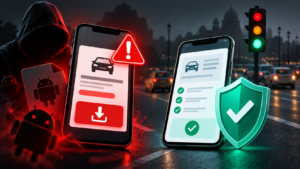
| Install an app for an investigation. | What access would the app grant, and who has verified the request? | Remote control, screen sharing and verification codes. |
This table is an original verification aid. A caller’s uniform, badge graphic, documents or knowledge of your name does not resolve these questions.
Create space to verify
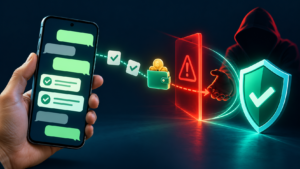
End the suspicious interaction when you can do so safely. Contact a trusted person using an established route. Find the claimed organization’s genuine contact details yourself; do not rely on the number, link or replacement contact supplied by the caller.
The US Federal Trade Commission describes government-impersonation scams and payment pressure in its official guidance. Those examples help explain the pattern; they do not establish the legal procedure of every jurisdiction.
A familiar voice or alarming image also needs independent checking. The FBI’s December 2025 virtual-kidnapping alert identifies altered images used as purported evidence of a hostage situation. Contact the named person through a separate trusted channel. If danger remains plausible, involve the appropriate local emergency authority rather than conducting a private investigation.
If you have already acted
Write down what happened: payments, account secrets disclosed, documents sent, software installed and access granted. Contact the affected bank, payment provider or account service through its genuine support route. Ask about available protective measures and recovery options. Speed may matter, but there is no universal refund deadline or guaranteed reversal.
Keep relevant messages, timestamps and transaction references securely. Avoid publishing identity documents or private account details while seeking help. Use official reporting services appropriate to your location. The FTC response guide provides examples of contacting affected providers; its legal provisions and reporting channels are US-specific.
If device access was granted, stop using that device for sensitive transactions until the access is understood and removed with trusted assistance. Use a separate trusted device for account recovery when available. See our OTP guide if a code was exposed.
Prepare a household verification plan
Choose two trusted contacts and record how to reach them if the usual phone is unavailable. Agree that an unexpected demand for secrecy or immediate payment will trigger independent verification. Practice with a written fictional scenario, not a surprise threatening call.
For each scenario, record the claimed authority, requested action, independent contact route and exposed information. This exercise measures whether you have a usable checking process; it cannot certify that a future message is genuine.
Glossary
- Impersonation: pretending to be a trusted person or institution.
- Remote access: the ability to view or control a device from elsewhere.
- Independent verification: checking through a trusted route separate from the suspicious interaction.
- Virtual kidnapping: an extortion claim that someone has been kidnapped without reliable evidence establishing that claim.
Sources and editorial review
Updated 1 October 2026. This article replaces unsupported statistics, unverified anecdotes and regional reporting instructions. Primary agency sources support the named examples; the FBI alert was available through its indexed search result, while direct retrieval timed out during this review. The worksheet is an editorial learning aid. No scam interaction or recovery process was tested. Continue with our family-emergency verification guide and online-safety hub. Send corrections through our contact page.
Written and prepared by Kshitij Gupta.